



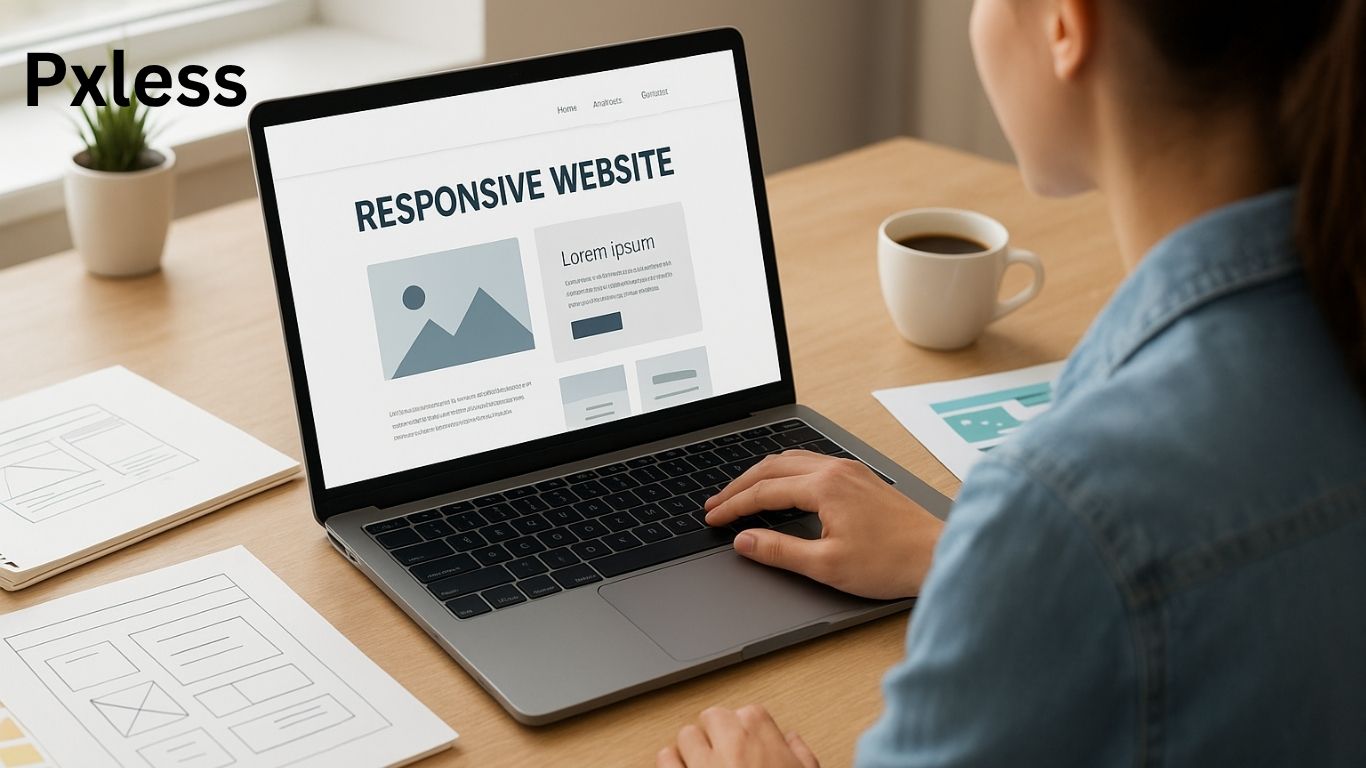
Have you ever visited a website that looked perfect on your laptop but totally broken on your phone? Text too small, buttons too big, layouts messed up? Yeah, we’ve all been there. That’s exactly where pxless design comes into play.
Pxless is not just a trendy buzzword—it’s a modern approach to creating flexible, responsive, and user-friendly digital experiences. In this guide, we’ll walk through everything you need to know about pxless, in simple, human language.
Let’s dive in.
H2: Introduction to Pxless
H3: What Does Pxless Mean?
“Pxless” simply means designing without relying heavily on fixed pixel (px) values.
Instead of saying:
“This button is 200px wide.”
You say:
“This button adapts to the screen size.”
Pxless design uses relative units like percentages, em, rem, vw, and vh to make layouts fluid and flexible.
Think of it like stretchy clothing—it fits different body sizes without tearing.
H3: Why Pxless Matters in the Digital Age
Today, people browse on:
-
Phones 📱
-
Tablets 📲
-
Laptops 💻
-
Smart TVs 📺
-
Smartwatches ⌚
If your design only works on one screen size, you’re already behind.
Pxless helps your content look good everywhere.
H2: The Evolution of Digital Measurements
H3: From Pixels to Relative Units
In the early days of the web, designers loved pixels. Why?
Because screens were similar.
But today, screens come in thousands of sizes. Pixels stopped being reliable.
So developers moved toward:
-
Relative units
-
Flexible grids
-
Adaptive layouts
H3: Limitations of Fixed Pixel Design
Pixel-based design suffers from:
-
Poor scalability
-
Bad accessibility
-
Broken layouts
-
Zoom issues
It’s like building a house with fixed doors—some people won’t fit.
H4: The Rise of Responsive Design
Responsive design changed everything. It introduced:
-
Media queries
-
Flexible grids
-
Fluid images
Pxless fits perfectly into this revolution.
H2: Understanding Pxless Design
H3: Core Principles of Pxless
Pxless design follows three main rules:
-
Be flexible
-
Be scalable
-
Be user-centered
Your design adapts, not resists.
H3: How Pxless Works
Instead of fixed numbers, pxless uses ratios.
Example:
-
Font size: 1.2rem
-
Width: 80%
-
Height: 50vh
Everything adjusts automatically.
H4: Relative Units Explained
Here’s the secret sauce:
-
em → Based on parent font size
-
rem → Based on root font size
-
% → Relative to container
-
vw → Viewport width
-
vh → Viewport height
They’re the building blocks of pxless.
H2: Key Units Used in Pxless Systems
H3: EM and REM
EM and REM are mostly used for text.
-
em = local scaling
-
rem = global scaling
REM is easier for beginners.
H3: Percentage (%)
Percentages make layouts fluid.
Example:
width: 50%;
This means “half of the container.”
H3: VW and VH
These units depend on screen size.
-
1vw = 1% of screen width
-
1vh = 1% of screen height
Great for full-screen layouts.
H4: Comparison Table (Conceptual)
| Unit | Based On | Best For |
|---|---|---|
| em | Parent | Text |
| rem | Root | Global scaling |
| % | Container | Layout |
| vw | Screen | Full-width |
| vh | Screen | Full-height |
H2: Benefits of Using Pxless Design
H3: Better Responsiveness
Your site adapts instantly.
No extra work. No extra hacks.
H3: Improved Accessibility
Users can:
-
Zoom easily
-
Increase font size
-
Use screen readers
Pxless respects user preferences.
H3: Device Compatibility
One design. Thousands of devices.
That’s power.
H4: Future-Proof Layouts
New devices? No problem.
Pxless grows with technology.
H2: Pxless vs Pixel-Based Design
H3: Performance Comparison
Pxless loads faster because:
-
Less CSS overrides
-
Fewer media queries
-
Cleaner structure
H3: Usability Comparison
Users prefer pxless because it feels natural.
Pixel-based feels stiff. Like wearing shoes two sizes too small.
H4: Real-World Examples
Netflix, Google, and Airbnb rely heavily on relative layouts. Why? Because users matter.
H2: Pxless in Web Development
H3: Pxless in CSS
Example:
Simple. Clean. Flexible.
H3: Pxless in Frameworks
Frameworks like:
-
Tailwind
-
Bootstrap
-
Material UI
Encourage relative units.
H4: Pxless in Modern UI Libraries
React, Vue, and Angular work beautifully with pxless layouts.
H2: Pxless for Mobile and App Design
H3: Mobile-First Approach
Pxless supports mobile-first design.
You build small, then scale up.
H3: Cross-Platform Benefits
One codebase → Multiple platforms.
Less work. More impact.
H4: User Experience Impact
Smooth layouts = Happy users.
Happy users = More conversions.
H2: How to Start Using Pxless
H3: Tools You Need
-
Code editor
-
Browser dev tools
-
CSS knowledge
That’s it.
H3: Basic Setup
Start with:
Then use rem everywhere.
H4: First Pxless Project
Try redesigning a small blog. Replace px with rem and %.
Practice makes perfect.
H2: Best Practices for Pxless Design
H3: Typography Scaling
Use modular scales.
Example:
-
Base: 1rem
-
Headings: 1.5rem, 2rem, 3rem
H3: Layout Management
Use:
-
Flexbox
-
Grid
-
Percentages
Avoid fixed widths.
H4: Spacing and Margins
Margins in rem or % keep spacing consistent.
H2: Common Mistakes to Avoid
H3: Overusing Absolute Values
Mixing px and rem too much ruins flexibility.
Stay consistent.
H3: Ignoring Testing
Test on:
-
Phones
-
Tablets
-
Desktops
Always.
H4: Poor Documentation
Document your unit choices for future developers.
H2: SEO and Performance Benefits of Pxless
H3: Page Speed Improvements
Lightweight layouts load faster.
Google loves speed.
H3: Search Engine Optimization
Better UX → Lower bounce rate → Better ranking.
Simple math.
H4: Core Web Vitals
Pxless helps optimize:
-
CLS
-
LCP
-
FID
Which boosts SEO.
H2: Real-World Applications of Pxless
H3: E-commerce Websites
Responsive product pages = More sales.
H3: SaaS Platforms
Dashboards scale better with pxless.
H4: Portfolio Sites
Designers love pxless for creativity.
H2: Future of Pxless Design
H3: AI and Responsive Design
AI will soon auto-optimize layouts using pxless principles.
Exciting, right?
H3: Emerging Standards
CSS keeps evolving. Pxless is becoming the default.
H4: Industry Trends
Designers now think “fluid-first,” not “pixel-first.”
H2: Learning Resources for Pxless
H3: Online Courses
Platforms like Udemy and Coursera offer responsive design courses.
H3: Documentation
MDN Web Docs is your best friend.
H4: Community Support
Join forums, Discord groups, and GitHub communities.
H2: Conclusion
Pxless design is not just a technique—it’s a mindset.
It’s about creating digital experiences that adapt, grow, and serve users better. By moving away from rigid pixels and embracing flexibility, you future-proof your projects and improve user satisfaction.
Think of pxless as water: it flows, adapts, and fits any container. And in today’s digital world, that’s exactly what you need.
If you’re serious about modern web and app design, pxless isn’t optional anymore—it’s essential.
H2: Frequently Asked Questions (FAQs)
1. Is pxless better than using pixels?
Yes, in most modern projects. Pxless offers better responsiveness, accessibility, and scalability.
2. Can I mix px and relative units?
Yes, but do it carefully. Overusing px reduces flexibility.
3. Is pxless hard to learn?
Not at all. If you know basic CSS, you can master pxless quickly.
4. Does pxless improve SEO?
Indirectly, yes. Better UX and speed help boost rankings.
5. Should beginners use pxless?
Absolutely. Learning pxless early builds strong design habits.

Sam Finley
You Can grow your website seo .And ranking website feel free contact : Ethinemily@gmail.com
Leave a Reply
You must be logged in to post a comment.