Sound isn’t just something we hear—it’s something we feel. From the calming rhythm of ocean waves to the gentle hum that helps you focus, sound has a powerful effect on the human mind and body. That’s exactly where Apple Music Sound Therapy steps in, blending cutting-edge technology with ancient healing principles to create a modern wellness experience.
In today’s fast-paced world, stress, poor sleep, and constant distractions feel like the norm. Apple Music’s sound therapy initiative aims to change that—one frequency at a time.
Sound therapy is a wellness practice that uses specific sounds, tones, rhythms, and frequencies to support mental, emotional, and physical well-being. Think of it as a massage for your brain—except instead of hands, it uses vibrations.
For centuries, cultures have used chanting, drums, singing bowls, and natural sounds for healing. Apple Music simply gives this ancient concept a sleek, digital makeover.
The Science Behind Healing Sounds
Every sound carries vibrations, and those vibrations interact with our nervous system. Certain frequencies can calm the mind, slow the heart rate, and even help regulate breathing. It’s not magic—it’s biology meeting acoustics.
Apple Music’s Entry Into Sound Therapy
Why Apple Music Introduced Sound Therapy
Apple has always been big on wellness, from Apple Watch health tracking to mindfulness features. Introducing sound therapy was a natural next step. With millions already using Apple Music daily, integrating therapeutic soundscapes makes mental wellness more accessible than ever.
Collaboration With Wellness Experts
Apple Music didn’t just throw together relaxing playlists. The sound therapy collections are created in collaboration with producers, sound engineers, and wellness professionals who understand how sound influences the brain.
Understanding Apple Music Sound Therapy
What Makes Apple Music Sound Therapy Unique
Unlike generic ambient music, Apple Music sound therapy is intentional. Every beat, tone, and frequency serves a purpose.
Curated Soundscapes
These aren’t random tracks. Each soundscape is carefully designed to support a specific mental state—whether that’s deep sleep, calm focus, or stress relief.
Adaptive Audio Technology
Apple’s spatial and adaptive audio technology enhances immersion, making you feel surrounded by sound rather than just listening to it. It’s like stepping into a sonic cocoon.
Types of Sound Therapy Available on Apple Music
Focus and Productivity Sounds
Perfect for studying or working, these tracks help reduce mental clutter. Think steady rhythms, low-frequency hums, and subtle pulses that keep your brain alert without overwhelming it.
Stress Relief and Relaxation
After a long day, these soundscapes help your nervous system downshift. Gentle tones, nature-inspired audio, and slow tempos signal your body that it’s safe to relax.
Sleep and Deep Rest Soundscapes
Sleep-focused sound therapy helps quiet racing thoughts and prepares the brain for rest. These tracks often use slow, repetitive patterns that align with natural sleep cycles.
Mindfulness and Meditation Audio
Designed for meditation and breathwork, these sounds act like training wheels for mindfulness—keeping your attention anchored when your mind wants to wander.
The Role of Science in Apple Music Sound Therapy
Neuroscience and Brainwaves
Your brain operates on electrical signals called brainwaves. Sound can influence these waves, gently nudging your brain into different states of awareness.
Frequency-Based Healing
Certain frequencies are believed to support relaxation, focus, or sleep.
Alpha, Beta, Theta, and Delta Waves
Beta: Alert, focused thinking
Alpha: Calm awareness
Theta: Deep meditation and creativity
Delta: Deep sleep and restoration
Apple Music sound therapy often targets alpha, theta, and delta states.
Benefits of Using Apple Music Sound Therapy
Mental Health Benefits
Users often report reduced stress, better focus, and improved emotional regulation. It’s like giving your brain a break from constant stimulation.
Physical Wellbeing Advantages
Relaxation sounds can lower heart rate and reduce muscle tension, supporting overall physical comfort.
Emotional Balance and Mood Enhancement
Sound therapy can help stabilize mood by creating a predictable, soothing auditory environment—especially helpful during emotionally overwhelming moments.
How to Access Apple Music Sound Therapy
Devices and Compatibility
Apple Music sound therapy works across iPhone, iPad, Mac, Apple Watch, and even Apple TV. Headphones are recommended for the best experience.
Subscription Requirements
An active Apple Music subscription is required. Once subscribed, you can search for sound therapy collections directly in the app.
How to Use Sound Therapy Effectively
Best Listening Practices
Use headphones when possible
Keep volume at a comfortable level
Choose a quiet environment
Creating a Personalized Routine
Consistency matters. Whether it’s 10 minutes before bed or background sound during work, regular use enhances benefits.
Apple Music Sound Therapy vs Traditional Therapy
Key Differences
Sound therapy isn’t a replacement for professional care, but it’s a powerful supplement. It’s accessible, affordable, and easy to use daily.
Complementary Use With Other Therapies
Many people use sound therapy alongside meditation, journaling, or breathing exercises for better results.
Who Can Benefit From Apple Music Sound Therapy
Students and Professionals
Great for focus, studying, and managing mental fatigue.
People With Sleep Issues
Soundscapes help establish a bedtime routine and promote deeper rest.
Wellness Enthusiasts
Anyone interested in mindfulness and self-care can benefit.
Apple Music Sound Therapy for Sleep
How Sound Impacts Sleep Cycles
Slow, rhythmic sounds encourage the brain to transition into deeper sleep stages naturally.
Recommended Playlists
Apple Music regularly updates sleep-focused sound therapy collections, making it easy to find the right fit.
Sound Therapy for Focus and Creativity
Boosting Concentration
Focus tracks reduce distractions and improve task endurance.
Enhancing Creative Flow
Theta-wave-inspired soundscapes help unlock creative thinking—perfect for writing, art, or brainstorming.
Future of Sound Therapy in Streaming Platforms
AI and Personalized Audio Healing
AI-driven sound therapy may soon adapt in real-time to your mood or activity.
The Growing Wellness Tech Market
Sound therapy is becoming a major pillar in digital wellness, and Apple Music is leading the charge.
Common Myths About Sound Therapy
Is It Just Music?
No. Sound therapy is intentionally designed with specific frequencies and rhythms.
Does It Really Work?
While results vary, many users experience noticeable benefits with consistent use.
Expert Opinions on Apple Music Sound Therapy
Insights From Therapists
Many wellness professionals see sound therapy as a valuable support tool for stress management.
Feedback From Users
Users praise its simplicity, accessibility, and calming effects.
Conclusion: Is Apple Music Sound Therapy Worth Trying?
Absolutely. Apple Music Sound Therapy combines science, technology, and creativity to offer an easy, enjoyable way to support mental and emotional well-being. It’s not about fixing everything—it’s about creating space to breathe, focus, and rest in a noisy world.
Sometimes, healing doesn’t need words. Sometimes, it just needs the right sound.
FAQs
1. Is Apple Music sound therapy free? No, it requires an active Apple Music subscription.
2. Can sound therapy replace meditation? It can support meditation but doesn’t replace personal mindfulness practices.
3. How long should I listen to sound therapy? Even 10–20 minutes can be effective, depending on your goal.
4. Do I need special headphones? No, but good-quality headphones enhance the experience.
5. Is Apple Music sound therapy safe for daily use? Yes, it’s designed for regular, long-term use.
Every computer user has faced that dreaded moment—your hard drive suddenly runs out of space, and you have no clue what’s gobbling up your storage. You delete a few files, maybe empty the recycle bin, and boom—still nearly full. Sound familiar? Well, that’s exactly where a disk space analyzer toolbecomes a lifesaver. These tools take away all the guesswork by showing you exactly what’s taking up space on your drives in a visual, intuitive way so you can take back control.
In this expansive guide, we’ll dive deep into what disk space analyzers are, why they’re essential, how they work, and the top tools you can use in 2026 to keep your storage optimized, clean, and efficient. You’ll learn practical tips, real-life applications, features to look for, and even advanced techniques for power users and IT professionals alike.
Introduction to Disk Space Analyzer Tools 1.1 What Is a Disk Space Analyzer? 1.2 Why Should You Use One?
How Disk Space Analyzers Work 2.1 Scanning and Indexing 2.2 Visual Representation 2.3 File Categorization and Filters 2.4 Reporting and Export
Benefits of Using a Disk Space Analyzer 3.1 Saving Time and Effort 3.2 Reclaiming Precious Storage 3.3 Performance Optimization 3.4 Detailed System Insights
Key Features to Look For 4.1 Visual Charts and Treemaps 4.2 Filtering and Sorting Options 4.3 Cleanup Tools 4.4 Reporting Formats
Top Disk Space Analyzer Tools in 2026 5.1 WinDirStat 5.2 DaisyDisk 5.3 Filelight 5.4 Disk Usage Analyzer (GNOME) 5.5 Disk Analyzer Pro 5.6 Other Worthwhile Mentions
Choosing the Right Tool for Your Setup 6.1 Windows Users 6.2 macOS Users 6.3 Linux and Advanced Users
Tips for Using Disk Space Analyzers Effectively 7.1 Regular Scanning Schedule 7.2 Focus on Large Files First 7.3 Use the Filter Tools 7.4 Combine With Other Cleanup Tools
Advanced Uses for IT and Storage Admins 8.1 Network and Server Disk Analysis 8.2 Scheduled Reports 8.3 Comparing Disk Usage Changes 8.4 Enterprise Usage Metrics
Common Mistakes and How to Avoid Them 9.1 Deleting System Files 9.2 Not Backing Up Before Cleanup 9.3 Misinterpreting the Visual Data
Conclusion & FAQs
1. Introduction to Disk Space Analyzer Tools
1.1 What Is a Disk Space Analyzer?
Imagine having X-ray vision for your hard drive. That’s what a disk space analyzer tooldoes. At its core, it’s software designed to scan your storage devices and reveal what’s consuming your disk space—whether it’s massive video files, forgotten backups, duplicate folders, or bloated applications. Instead of manually combing through hundreds of folders and hunting blind, disk space analyzers map out storage usage in digestible visual layouts and easy-to-understand stats. These tools are available for nearly every platform, including Windows, macOS, and Linux.
1.2 Why Should You Use One?
Every file system accumulates clutter over time. From temporary cache files to forgotten downloads, storage gets filled up, and performance takes a hit. A disk space analyzer cuts through that chaos. It not only shows you where your data lives but also lets you make informed decisions about what can stay or go. For casual users, it helps free up space. For professionals, it offers detailed breakdowns for optimization. The result? Faster systems, clearer insights, and more efficient storage usage.
2. How Disk Space Analyzers Work
2.1 Scanning and Indexing
To understand your storage, a disk space analyzer scans your drives—sometimes in minutes—collecting information on every file and folder. It then indexes this data so you can interact with it without waiting for constant rescans.
2.2 Visual Representation
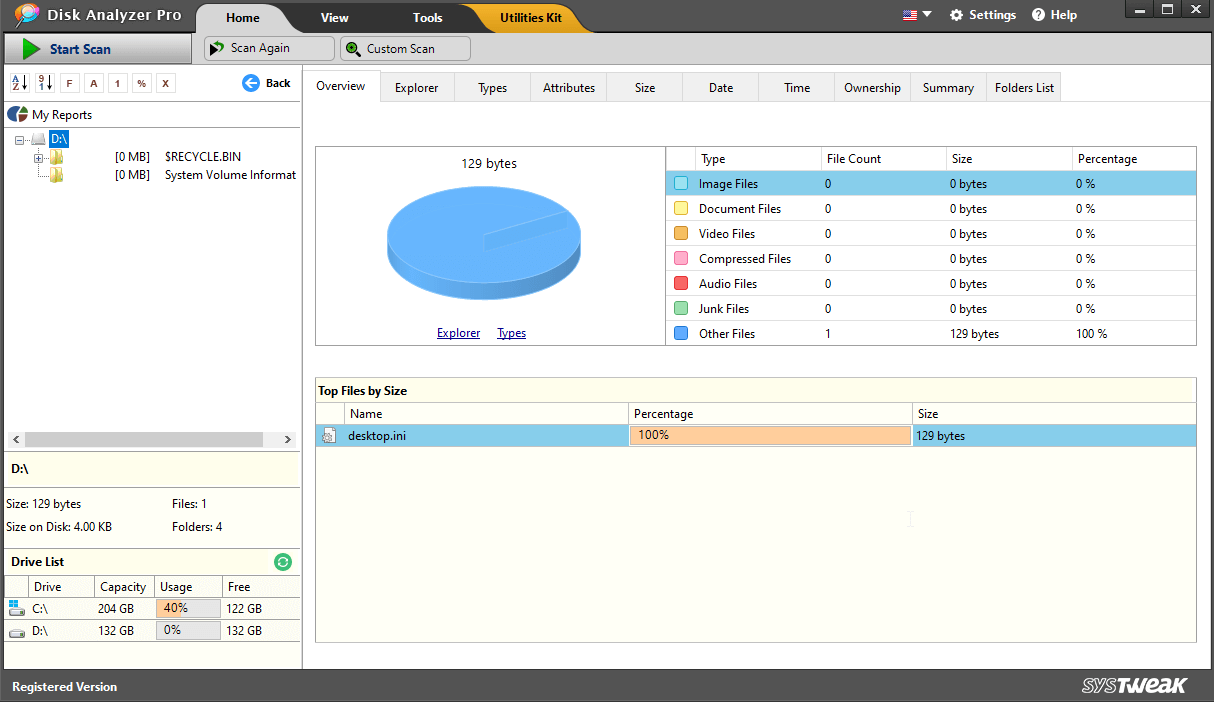
Most modern analyzers use visual charts, like treemaps or ring diagrams, to illustrate space distribution. Big folders show up as large blocks or slices, making them instantly recognizable. WinDirStat’s colorful treemap, for example, helps you see massive space users at a glance.
2.3 File Categorization and Filters
Good tools let you filter results based on file types, size ranges, dates, or even ownership. Want to see only videos or files larger than 1GB? Easy. This categorization helps pinpoint the biggest potential space savings.
2.4 Reporting and Export
Professional tools often provide export options—PDF, CSV, XML—so you can save reports, analyze trends, or share insights with colleagues. This feature is especially useful for IT admins managing large systems.
3. Benefits of Using a Disk Space Analyzer
3.1 Saving Time and Effort
Instead of digging folder by folder, these tools map out your storage in seconds. You can instantly locate directories eating up the most space.
3.2 Reclaiming Precious Storage
By identifying and removing unneeded or redundant files, you free up gigabytes of space that could be used for critical applications, backups, or new content.
3.3 Performance Optimization
System performance often slows down when disks are nearly full. Cleaning up space can result in smoother operations and faster file access.
3.4 Detailed System Insights
Whether you’re a casual user or a professional, gaining insights into file distribution helps with better storage planning and long-term maintenance.
4. Key Features to Look For
Understanding which features matter will help you pick the best tool for your needs.
4.1 Visual Charts and Treemaps
Look for tools that offer clear graphical breakdowns of disk usage. This makes identifying large files intuitive and efficient.
4.2 Filtering and Sorting Options
Being able to isolate files by type, size, or age helps you make smarter cleanup decisions.
4.3 Cleanup Tools
Some analyzers include built-in file deletion or cleanup features, enabling you to act instantly once you identify space hogs.
4.4 Reporting Formats
Exportable reports can be useful for audits, system reviews, or enterprise-level documentation.
5. Top Disk Space Analyzer Tools in 2026
5.1 WinDirStat
WinDirStatis a classic and one of the most popular disk space analyzers for Windows. It offers a colorful treemap view, directory lists, and extension stats—helping users visualize and manage storage with clarity.
5.2 DaisyDisk
For macOS users, DaisyDiskoffers beautiful sunburst visualizations that make finding large files fun and easy. Its quick previews let you decide what to delete or move.
5.3 Filelight
If you’re on Linux or KDE environments, Filelightshows disk usage in concentric ring charts. It’s intuitive and powerful for visual breakdowns.
5.4 Disk Usage Analyzer (GNOME)
Another great open-source option is Disk Usage Analyzer (formerly Baobab), offering flexible scans and a clean graphical representation of your drive usage.
5.5 Disk Analyzer Pro
For Windows users who want advanced search and removal features, Disk Analyzer Prolets you find junk files, duplicates, and unused data quickly.
5.6 Other Worthwhile Mentions
There are many other analyzers worth exploring, including portable options, command-line tools, and enterprise-level solutions.
6. Choosing the Right Tool for Your Setup
Whether you’re on Windows, macOS, or Linux, the right tool depends on your environment and needs.
6.1 Windows Users
WinDirStat remains a top choice due to its open-source nature and solid visualization. Pair it with cleanup utilities for maximum effect.
6.2 macOS Users
macOS users lean toward DaisyDisk for its polished interface and seamless experience with Apple file systems.
6.3 Linux and Advanced Users
Linux users might prefer tools like Filelight or command-line options like ncdufor quick remote system analysis.
7. Tips for Using Disk Space Analyzers Effectively
7.1 Regular Scanning Schedule
Make scanning a routine—monthly or quarterly—to avoid unexpected storage cr
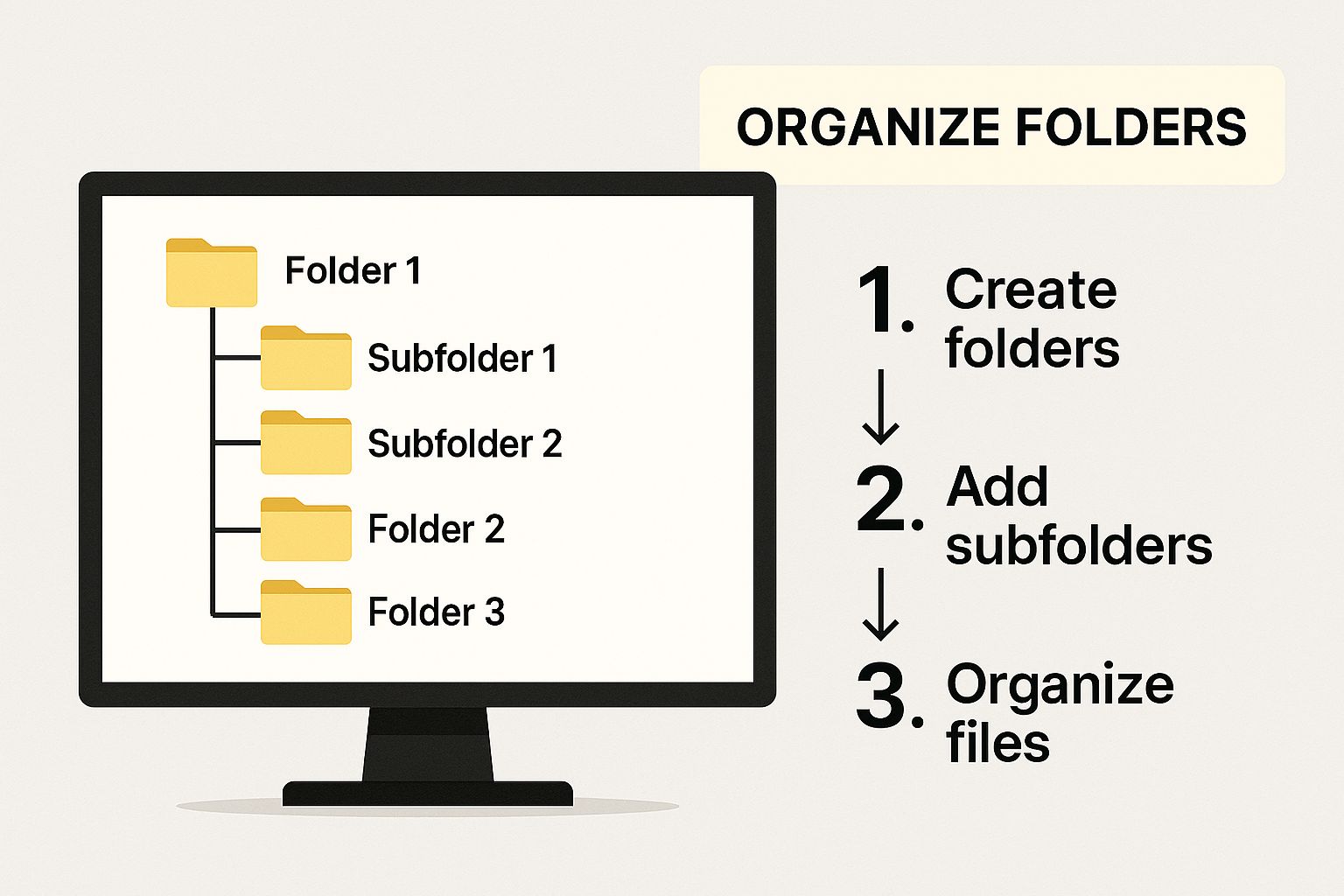
When you’ve ever looked at your computer files and felt overwhelmed, you’re not alone. A folder hierarchyrefers to the way folders and subfolders are structured to store and organize digital files in a logical way. Think of it like a filing cabinet: you have big drawers for broad topics and smaller folders inside for specific items. This structure helps you know where everything is, so you don’t waste time searching aimlessly.
A folder hierarchy creates an intuitive, tree‑like system that breaks down your digital space into manageable pieces. Just like how books in a library are ordered by genre, author, and title, digital folders help keep your data organized. Without it, files pile up randomly, making it difficult to find anything once you forget exactly where you saved it. In essence, a good hierarchy is the bedrock of any organized digital workspace.
Whether you’re storing documents, photos, videos, or spreadsheets, folder hierarchies let you categorize them so each file has its rightful place. When you use a clear structure, productivity increases, stress decreases, and digital chaos becomes a thing of the past. Ultimately, folder hierarchies make computers easier to use—and life a bit more manageable.
Imagine walking into a messy room with things scattered everywhere—you’d spend ages finding what you need. The same thing happens in your digital world without organized folder structures.
When your folders are neat and labeled correctly, you can locate files instantly. This isn’t just about aesthetics; it’s about saving valuable time. A well‑organized system boosts productivity and reduces frustration. You aren’t wasting energy retracing where you saved that file you worked on last week—it’s right where it should be.
Additionally, cluttered digital systems increase the risk of losing files entirely. If your folders aren’t logical, you might save duplicates in different places, leading to version confusion. This becomes especially problematic in professional environments where collaboration and accuracy are key.
Furthermore, if you ever need to back up or transfer your files, a tidy hierarchy makes the process smoother and safer. You’ll avoid accidentally skipping important folders or duplicating unnecessary ones. Organization isn’t optional—it’s critical.
Benefits of a Well‑Designed Folder Hierarchy
A carefully constructed folder system brings benefits that extend beyond simple organization. First, it promotes clarity. When each folder has a well‑defined purpose, there’s no second guessing about where files belong. It enhances team collaboration because everyone understands the structure and knows where to store or find shared files.
Next, time savings is a major benefit. Instead of scrolling through hundreds of unsorted files, you can go straight to the subfolder you need. This is especially useful for professionals juggling multiple projects. Imagine opening up a “Projects” folder and finding subfolders clearly labeled by client or date—your brain doesn’t have to work overtime to figure out what belongs where.
Security and backups also improve. When folders are logically organized, backups are more comprehensive and less prone to errors. You won’t accidentally overwrite important files or miss key sections during cloud storage syncs.
Finally, a good folder hierarchy sets the foundation for automated workflows. Modern software tools can tag, sync, or categorize files more accurately when your structure is logical and consistent.
Basic Principles of Folder Hierarchy
Before jumping into creating your perfect folder system, you need to understand some basic principles that keep your hierarchy efficient over time. These principles aren’t rigid rules—they’re guidelines that make the difference between chaos and harmony.
The Rule of Simplicity
Simplicity should always guide your design process. It’s tempting to create deep nested folder systems with ten layers of subfolders, but that often backfires. The goal is to balance detail with ease of navigation. If it takes more effort to drill down into folders than to find the file itself, your system is too complex. Keep folders meaningful and avoid unnecessary splits.
For example, instead of having a folder like:
Work > 2026 > Projects > Project A > Documents > Drafts
You might simplify it to:
Work > Project A > Drafts
This stripped‑down approach focuses on clarity and accessibility. The fewer clicks between you and the file, the better.
Consistency is Key
Consistency means using the same naming convention and structure across all folders. Inconsistent names like “Docs,” “Documents,” and “Work Docs” cause confusion. When naming, choose a pattern and stick with it. For instance, “YYYY‑MM‑DD” for dates or always placing client names before project types can create predictability.
Consistency also helps in collaborative settings. A team that follows the same folder system doesn’t waste time clarifying where to save or retrieve files. This is why companies often publish internal standards for digital storage structures.
Planning Your Folder Structure
Now that you understand the importance and core principles, it’s time to plan your folder hierarchy. Planning might seem tedious, but it lays the groundwork for long‑term success.
Identify Your Needs and Goals
Start by asking: What do I need to organize? Are you dealing with personal photos, work projects, research files, or something else entirely? Your answer guides the entire hierarchy.
Different needs call for different structures. A photographer might organize by year → client name → shoot date, whereas a student might prefer subject → semester → assignment type.
Write down your main categories. Don’t worry about subfolders yet; simply list the broad areas that matter. This gives you a bird’s‑eye view of your digital priorities.
Map Out Major Categories
With your needs identified, sketch out how major areas relate. You might use a whiteboard, sticky notes, or simply a notebook. Draw a tree with the main folders at the top and branches for subfolders.
This mapping stage isn’t set in stone—it’s your chance to experiment and refine your logic before committing it to your computer. Treat it like organizing a closet before you actually install the shelves.
Subcategories and Logic
Once major folders are in place, it’s time to break them down into subcategories. Ask yourself: What smaller groups naturally fit under this bigger one? For a “Photos” folder, subcategories might include:
Year
Event or Trip
Raw
Edited
Notice how this system captures both time and purpose. Subcategories should reduce cognitive load—not add to it.
Examples of Folder Hierarchy in Real Life
Now let’s explore tangible examples that show how folder hierarchies help in different scenarios.
Personal Uses
Even outside work, a good folder hierarchy can simplify life.
Family Photos & Memories
Most people have thousands of photos—and if they’re all dumped into one folder, finding anything feels like searching for a needle in a haystack. A logical hierarchy for photos might look like:
This structure makes it easy to browse by year and event. If you want to find Grandma’s birthday pictures from last year, you don’t scroll endlessly—you go straight to the folder.
Personal Finance Docs
Keeping finances organized is crucial for tax season and budgeting. A smart hierarchy could be:
Each project has its own space with clear subdivisions. This prevents confusion when multiple people access the same drive.
Client Documentation
If you’re managing multiple clients, organizing by client can eliminate chaos:
Clients
├── Client A
│ ├── Contracts
│ └── Invoices
└── Client B
├── Contracts
└── Invoices
Now you know exactly where contracts, proposals, and invoices live—no surprises.
Common Folder Structure Mistakes to Avoid
Even with good intentions, people often make similar mistakes:
Over‑nesting:Too many subfolders make navigation painful.
Unclear naming:Labels like “Stuff” or “Miscellaneous” are useless.
Duplicate systems:Having one system on a laptop and another on the cloud leads to confusion.
Skipping backups:Without backups, even the best hierarchy can’t save lost files.
Avoid these by planning carefully and revisiting your structure regularly.
Tools & Tips to Maintain Folder Order
Keeping folders organized is an ongoing task, but certain tools can help:
Use cloud storagelike Google Drive or Dropbox to sync and access files anywhere.
Enable automatic backupsto protect your hierarchy from data loss.
Periodically review and pruneold or unused folders.
Use search tools and tagsto supplement your hierarchy.
Apps like file managers and tagging extensions can boost productivity and ensure you don’t lose track of important data.
Conclusion
A well‑organized hierarchy of foldersis one of the simplest yet most powerful ways to manage digital clutter. Whether you’re organizing personal photos or professional work documents, a thoughtful structure saves time, reduces frustration, and protects your data. By planning ahead, staying consistent, and avoiding common mistakes, you can turn any messy drive into a streamlined system that works for you.
FAQs
Q1: What’s the best way to start organizing my folders? Start by identifying major categories and sketching a logical structure before creating folders digitally.
Q2: How deep should my folder hierarchy be? Keep it shallow enough to find files with minimal clicks—typically no more than 3–4 levels deep.
Q3: Should folders be named with dates first or keywords? It depends on your use case, but consistency matters more than order.
Q4: Can I use tags instead of folders? Tags are great for supplementary organization, especially in photo apps, but they usually work best alongside a solid folder structure.
Q5: How often should I reorganize my folders? Review every few months to prune unused files and refine your syst
File management sounds simple until you are staring at two folders containing hundreds—or even thousands—of files and trying to figure out what changed. That’s where software to compare files in foldersbecomes invaluable. These specialized tools scan directories and identify differences between files, whether it’s content, timestamps, sizes, or permissions. Instead of manually opening files one by one, comparison software automatically highlights the changes in seconds.
Think of it like a “spot the difference” game—but on steroids. Whether you are a developer comparing source code, a system administrator checking configuration files, or someone verifying backups, these tools streamline the process. Many modern solutions even display files side-by-side and highlight additions, deletions, or edits so you can instantly see what’s different.
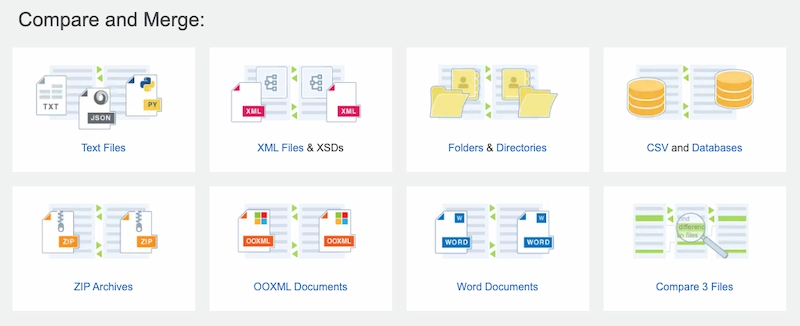
Another powerful advantage is automation. Instead of checking only two files, these programs can compare entire directory trees, including nested folders. Some even allow comparisons across remote servers or cloud storage. According to software documentation, advanced tools like UltraComparecan compare two or three files or folders simultaneously and highlight differences visually, making analysis significantly faster.
Without these tools, managing large file structures becomes tedious and error-prone. Even a small oversight—like a missing configuration file or outdated document—can lead to costly mistakes. Folder comparison software eliminates that risk by making differences instantly visible.
Let’s be honest: manually comparing files is frustrating. Imagine opening two folders and trying to remember which files belong where. Maybe you check modification dates, but that doesn’t always guarantee the contents are identical. A file could have the same name yet contain completely different data.
Manual comparison also becomes nearly impossible when dealing with complex projects. Developers often work with hundreds of source code files, and identifying differences between versions by hand would take hours. Even worse, humans are prone to mistakes when scanning large amounts of information.
Folder comparison tools solve this problem by automating everything. They quickly scan directories and categorize files into groups such as:
Identical files
Modified files
Missing files
New files
Instead of guessing, you get a precise breakdown of differences. That level of accuracy is crucial for tasks like software updates, backups, and version control.
Another hidden benefit is time savings. What might take hours manually can often be done in seconds using the right software.
Key Functions of Folder Comparison Tools
Most file comparison softwareshares a core set of functions that make them incredibly powerful. The first is directory scanning, which analyzes both folders and builds a map of every file and subfolder. This map is then compared to identify mismatches.
Another key function is visual highlighting. Differences between files are usually marked with colors—green for new files, red for missing ones, and yellow for modified content. This visual approach helps users instantly understand what changed.
Many tools also support synchronization. Once differences are identified, you can copy or update files to make both folders identical. This is particularly useful for backups or mirrored directories.
Advanced features include:
Comparing compressed archives without extracting them
Ignoring whitespace or formatting changes in text files
Generating detailed comparison reports
Some enterprise-level tools even integrate with version control systems like Git. This allows teams to track code changes across multiple contributors while resolving conflicts quickly.
Top Software to Compare Files in Folders
WinMerge
WinMerge is one of the most widely used open-source tools for comparing files and folders. It’s designed primarily for Windows users and offers a clean visual interface that makes differences easy to spot.
The software displays files side-by-side and highlights modifications in text documents or code. It also supports three-way file comparison, making it useful when merging changes from multiple sources.
One standout feature is its ability to compare entire folder trees, including subfolders. Instead of analyzing files individually, WinMerge scans the entire directory structure and presents results in a tree-style view. This makes it easier to navigate large projects.
WinMerge also supports plugins and integration with version control systems, allowing developers to use it as part of their coding workflow. Because it’s open source, it remains a popular choice among programmers and IT professionals who want a free but powerful solution.
UltraCompare
UltraCompare is a professional-grade file comparison tool designed for Windows, Mac, and Linux users. It supports two-way and three-way comparisons, allowing users to analyze differences between multiple files or directories simultaneously.
What makes UltraCompare stand out is its versatility. It can compare not only plain text files but also documents like Word, Excel, and PDF files. The software also supports comparing compressed archives and even remote files stored on FTP servers.
Another major advantage is its folder synchronization capability. Once differences are detected, the software can automatically merge or update files to keep directories consistent. This is especially useful for developers managing project repositories or teams maintaining shared documents.
UltraCompare also handles very large filesthat many other tools struggle with. For organizations dealing with massive datasets or logs, this feature alone can be a huge time saver.
DirEqual
DirEqual is a straightforward directory comparison tool designed specifically for Windows. It focuses on simplicity while still offering powerful features for analyzing folder differences.
The software compares directories based on file contents, timestamps, and permissions, giving users a comprehensive view of changes. This flexibility makes it useful for backup verification and system monitoring.
DirEqual also provides different comparison modes, including quick comparisons based on metadata and deep comparisons that analyze files byte-by-byte. The results are displayed in a color-coded interface that makes differences easy to understand.
Another helpful feature is its ability to generate detailed reports of changes. These reports can be used to document updates or verify that backups were completed successfully.
Guiffy Folder Compare
Guiffy is another powerful tool that supports cross-platform folder comparisonacross Windows, macOS, Linux, and Unix systems.
One of Guiffy’s strengths is its Explorer-like interface, which allows users to navigate folders easily while reviewing differences. The software also supports recursive comparisons, meaning it can analyze entire directory trees automatically.
Guiffy includes automation features such as command-line integration and API access. These capabilities allow developers and system administrators to integrate folder comparisons into automated workflows or scripts.
Because of its flexibility and cross-platform compatibility, Guiffy is widely used in enterprise environments where teams work across different operating systems.
Core Features to Look for in Folder Comparison Software
Visual Difference Detection
One of the most valuable features of comparison software is the ability to display differences visually. Instead of scanning through long lists of filenames, users can immediately see changes highlighted within the file itself.
For example, if two code files differ by only a few lines, the software highlights those exact lines. This makes troubleshooting far easier, especially for developers working on complex applications.
Visual comparison also reduces cognitive load. Rather than interpreting raw data, the user simply follows highlighted markers showing where changes occurred.
Folder Synchronization
Many tools don’t just compare files—they also synchronize them. After identifying differences, the software can copy missing files, update modified ones, or delete outdated versions.
This feature is particularly useful for:
Backup management
Cloud storage synchronization
Project collaboration
Instead of manually updating folders, synchronization tools ensure that both directories remain consistent.
File Content Comparison
Sometimes two files may have the same name but completely different contents. File comparison software solves this problem by analyzing data inside the file.
Some tools perform byte-by-byte comparisons, ensuring that files are identical at the binary level. Others analyze text content and ignore formatting differences such as whitespace.
This capability is critical for developers and system administrators who need to verify file integrity.
Comparing Popular Tools
Feature Comparison Table
Software
Platform
Key Features
Best For
WinMerge
Windows
Open-source, visual diff, folder comparison
Developers
UltraCompare
Windows, Mac, Linux
3-way compare, FTP support, document comparison
Professionals
DirEqual
Windows
Content, timestamp, and permission comparison
Backup analysis
Guiffy
Cross-platform
Recursive folder compare, automation API
Enterprise use
Choosing the Right Tool for Your Workflow
Selecting the right software depends largely on your needs. Developers often prefer tools like WinMerge or UltraCompare because they integrate well with coding environments. On the other hand, IT administrators might choose DirEqual for its straightforward approach to folder comparison.
If cross-platform compatibility is important, Guiffy or UltraCompare may be better options. These tools allow teams using different operating systems to collaborate without compatibility issues.
Budget is another factor. Open-source tools like WinMerge are free, while professional solutions often require a license but offer more advanced features.
How Folder Comparison Software Works
File Metadata Comparison
Most tools start by comparing file metadatasuch as size, modification date, and name. This quick analysis helps identify obvious differences between files without reading their entire contents.
Metadata comparison is extremely fast, making it useful when scanning large directories. However, it isn’t always reliable because two files can have identical sizes yet contain different data.
Byte-by-Byte File Analysis
For deeper analysis, comparison software performs byte-by-byte checks. This method examines every piece of data in the file to confirm whether it is truly identical.
Although slower than metadata comparison, byte-level analysis ensures complete accuracy. Many tools allow users to choose between quick comparisons and full content comparisons depending on their needs.
Real-World Use Cases for File Comparison Tools
Software Development
Developers constantly compare files to track code changes between versions. Comparison tools highlight modifications line-by-line, making debugging and collaboration much easier.
These tools also help resolve conflicts when multiple developers modify the same file.
Backup Verification
Imagine copying thousands of files to a backup drive. How do you know everything transferred correctly?
Folder comparison tools analyze both directories and confirm that files match exactly. If something is missing or corrupted, the software flags it immediately.
Document Version Tracking
Writers, editors, and researchers frequently work with multiple versions of documents. Comparison software helps identify edits, additions, and deletions between versions.
This feature is especially useful when collaborating with teams or reviewing document revisions.
Tips to Use Folder Comparison Software Efficiently
Using comparison tools effectively requires a few best practices. First, organize your files before running comparisons. A well-structured directory makes analysis faster and easier.
Second, choose the right comparison mode. For quick checks, metadata comparison is sufficient. For critical files, use full content comparison.
Third, generate reports when possible. Reports provide a record of changes and can be helpful when auditing systems or verifying backups.
Finally, schedule regular comparisons if you manage large datasets. Automated checks ensure that differences are detected early before they cause bigger issues.
Conclusion
Software to compare filesin folders has become an essential tool for developers, IT administrators, and everyday computer users. These tools automate the process of identifying differences between files and directories, saving countless hours of manual work.
From open-source solutions like WinMerge to professional tools like UltraCompare and Guiffy, there are options available for every workflow and budget. The key is choosing a tool that offers the features you need—whether that’s visual comparison, folder synchronization, or deep file analysis.
As digital projects grow larger and more complex, the importance of reliable file comparison software will only increase. Instead of manually searching for differences, these tools provide clarity and accuracy in seconds.
FAQs
1. What is the best software to compare files in folders?
Popular options include WinMerge, UltraCompare, DirEqual, and Guiffy. Each offers different features depending on your operating system and workflow.
2. Can file comparison software detect duplicate files?
Yes. Many tools include duplicate detection features that identify identical files based on content or hash values.
3. Is there free software for comparing folders?
Yes. WinMerge is a well-known open-source tool that allows users to compare files and folders without paying for a license.
4. Can these tools compare files on different computers?
Some advanced tools can compare files over networks or FTP servers, allowing comparisons between remote systems.
5. Do file comparison tools work with binary files?
Yes. Many tools support binary comparison, enabling users to detect differences at the byte level.