



If you’re thinking about a career in finance and keep hearing the same question pop up—“Is FMVA certification worth it?”—you’re not alone. In a world where everyone is collecting certificates like Pokémon cards, it’s smart to pause and ask whether one actually delivers value or just looks shiny on LinkedIn.
Let’s break it all down, no fluff, no hype—just a real, human conversation about whether the FMVA certification deserves your time, effort, and money.
Table of Contents
ToggleWhat Is the FMVA Certification?
Overview of the FMVA Program
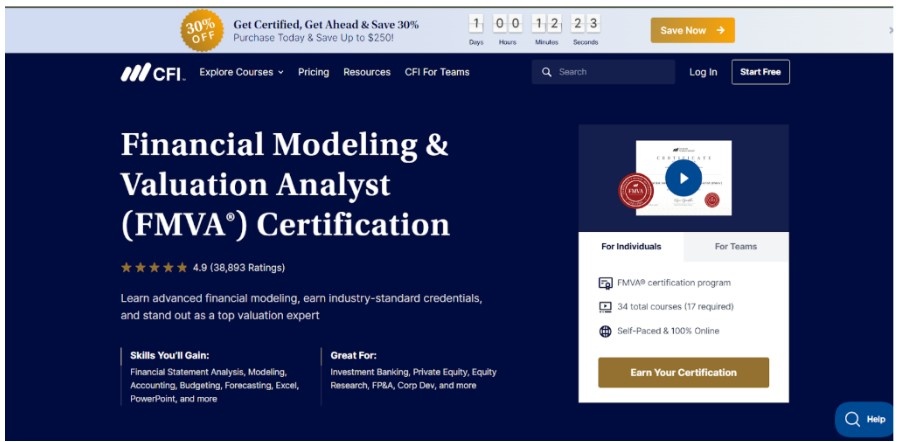
FMVA stands for Financial Modeling & Valuation Analyst certification. It’s a globally recognized credential designed to teach practical, job-ready financial skills. Unlike traditional finance programs that drown you in theory, FMVA is hands-on, spreadsheet-heavy, and very “learn by doing.”
Think of it as a gym for your finance muscles. You don’t just read about push-ups—you actually do them.
Who Offers the FMVA Certification?
The FMVA certification is offered by the Corporate Finance Institute (CFI), a well-known online education provider focused on finance, accounting, and data analysis skills.
What Does FMVA Stand For?
Full Form and Meaning
FMVA = Financial Modeling & Valuation Analyst
Simple, right? But the meaning runs deeper. It signals that you can:
-
Build financial models from scratch
-
Analyze companies like a pro
-
Translate numbers into real business insights
Core Philosophy Behind the Certification
The FMVA program is built around one core idea: employers care about what you can do, not just what you know. That’s why everything revolves around real-world applications.
Who Is the FMVA Certification For?
Students and Fresh Graduates
If you’re a student wondering how to stand out in a sea of similar resumes, FMVA can be a serious differentiator. It shows initiative and practical skill—two things recruiters love.
Working Professionals
Already in finance but feel stuck? FMVA helps sharpen your technical skills and opens doors to better roles, promotions, or lateral moves.
Career Switchers
Trying to pivot into finance from another field? FMVA acts like a bridge, giving you credibility and confidence without going back to university.
What Skills Do You Learn in the FMVA Program?
Financial Modeling Skills
You’ll learn how to build:
-
3-statement financial models
-
Forecasts and projections
-
Scenario and sensitivity analysis
Excel and Spreadsheet Mastery
Excel becomes your second language. Shortcuts, formulas, dashboards—you’ll move fast and clean.
Valuation Techniques
DCF Modeling
Discounted Cash Flow analysis becomes second nature. You’ll understand what actually drives a company’s value.
Comparable Company Analysis
You’ll learn how to value companies relative to peers, using real market data.
FMVA Curriculum Breakdown
Core Courses
These cover essentials like:
-
Financial analysis
-
Accounting fundamentals
-
Financial modeling best practices
Elective Courses
You can tailor the program with electives like:
-
Startup valuation
-
Real estate modeling
-
Power BI or Python for finance
Final Exam and Requirements
To earn the FMVA designation, you must:
-
Complete all required courses
-
Pass the final exam
-
Maintain academic integrity
No shortcuts. No freebies.
How Difficult Is the FMVA Certification?
Time Commitment
Most candidates take 4–6 months, depending on pace. It’s manageable but not lazy-weekend easy.
Exam Difficulty Level
The exam is challenging, but fair. If you actually do the work, you’ll be fine.
Pass Rate and Preparation Tips
There’s no official pass rate published, but consistent practice is the secret sauce. Treat it like training, not cramming.
FMVA Certification Cost: Is It Affordable?
Pricing Structure
FMVA costs significantly less than degrees like an MBA or certifications like CFA. One subscription covers everything.
Is It Worth the Investment?
For the price of a short vacation, you get a long-term career asset. That’s a pretty solid trade.
FMVA vs CFA: Which One Is Better?
Key Differences
-
FMVA: Practical, skill-based, shorter
-
CFA: Theory-heavy, long-term, investment-focused
Which Should You Choose?
If you want hands-on skills fast → FMVA
If you want deep academic prestige → CFA
They’re not enemies. They’re tools.
FMVA vs CPA vs MBA
Career Goals Comparison
-
FMVA: Corporate finance, FP&A, modeling
-
CPA: Accounting and audit
-
MBA: Leadership and management
Time and Cost Comparison
FMVA wins on speed and affordability. No debate.
Is FMVA Recognized by Employers?
Employer Perception
Yes—especially in corporate finance, investment banking, and consulting. Employers like skills they can immediately use.
Industries That Value FMVA
-
Investment banking
-
Private equity
-
Corporate finance
-
Startups and tech
Career Opportunities After FMVA
Investment Banking
FMVA-trained analysts hit the ground running.
Corporate Finance
Budgeting, forecasting, strategic analysis—you’ll be ready.
FP&A Roles
This is where FMVA shines brightest.
Consulting and Startups
Startups love people who can “do the numbers” without hand-holding.
FMVA Salary Impact: Does It Increase Your Pay?
Entry-Level Salary Impact
FMVA can help you land better roles faster, which often means higher starting pay.
Mid-Career Benefits
For professionals, FMVA can unlock promotions or justify salary negotiations.
Pros and Cons of FMVA Certification
Advantages
-
Practical, real-world skills
-
Affordable and flexible
-
Globally recognized
-
Strong ROI
Limitations
-
Not a replacement for experience
-
Less academic prestige than CFA
-
Requires self-discipline
Is FMVA Certification Worth It in 2026?
Market Trends
Finance is moving toward automation, analytics, and efficiency. FMVA aligns perfectly with this shift.
Long-Term Value
Skills don’t expire. That’s the real value.
Who Should NOT Do FMVA?
Situations Where FMVA May Not Help
-
If you hate Excel
-
If you want purely academic finance
-
If you expect instant job offers without effort
Final Verdict: Should You Get FMVA Certified?
If you want practical finance skills, faster career growth, and a certification that actually teaches you how to do the job, then yes—FMVA certification is absolutely worth it.
It’s not magic. But it’s powerful.
Conclusion
So, is FMVA certification worth it? For most aspiring finance professionals, the answer is a confident yes. It delivers practical skills, strong employer recognition, and excellent value for money. If you’re serious about finance and ready to put in the work, FMVA can be a real career accelerator.
FAQs
1. Is FMVA better than CFA?
They serve different purposes. FMVA is practical; CFA is theoretical.
2. How long does FMVA take to complete?
Typically 4–6 months, depending on your pace.
3. Can beginners do FMVA?
Yes. The program starts from fundamentals.
4. Is FMVA recognized globally?
Yes, especially in corporate finance and banking.
5. Does FMVA guarantee a job?
No certification guarantees a job—but FMVA significantly improves your chances.

Sam Finley
You Can grow your website seo .And ranking website feel free contact : Ethinemily@gmail.com
Leave a Reply
You must be logged in to post a comment.