



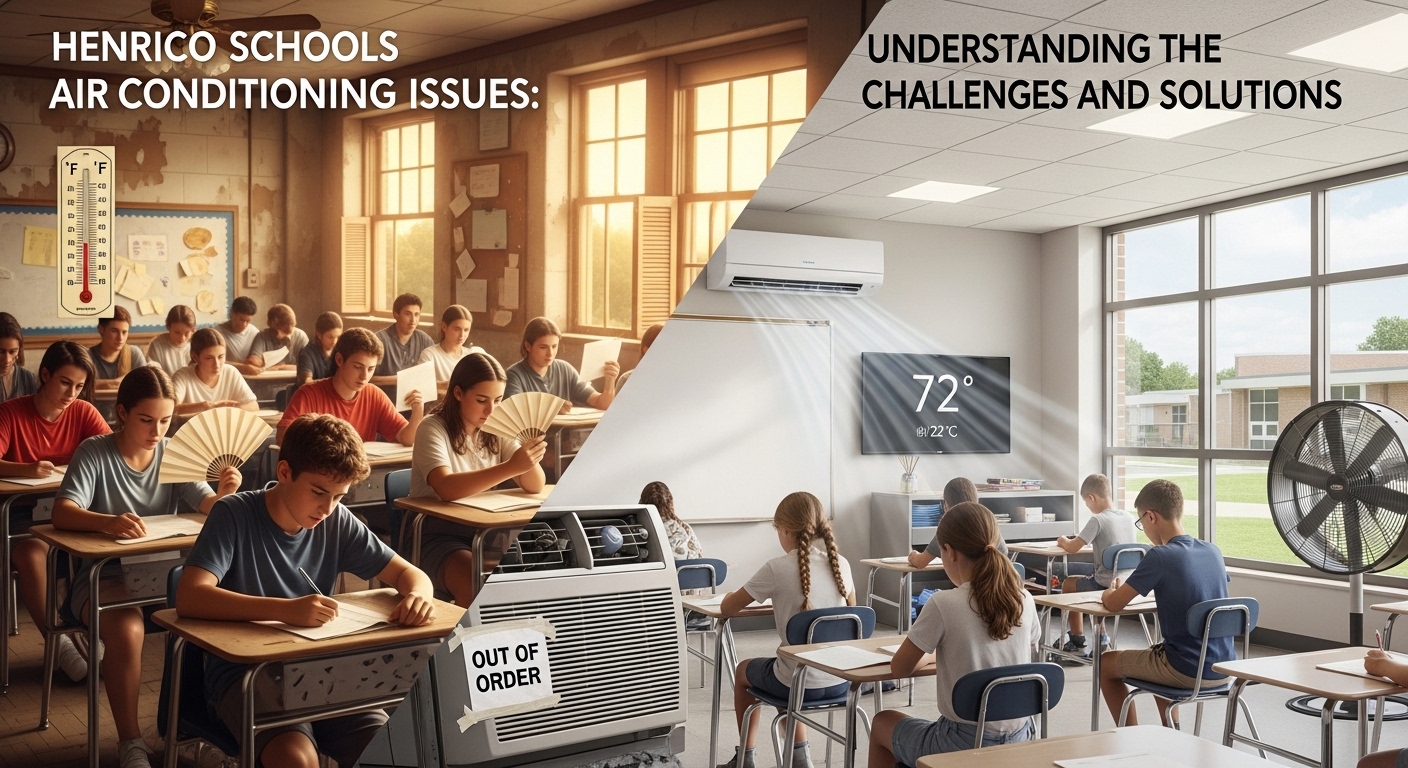
When the school year started in Henrico County, Virginia, in August 2025, reports began rolling out that several schools were struggling with air conditioning problems right as students and teachers returned to classrooms. This wasn’t a one‑off gripe — it was serious enough that at least one elementary school delayed its first day of classes entirely because cooling systems were failing in the heat.
Heat and humidity impact learning. When classrooms are too warm, students get uncomfortable, tired, and can’t focus — just the opposite of what educators want for a productive day. Teachers and staff, too, can find it harder to lead lessons when temperatures are rising toward triple digits inside buildings. With summer turning quickly into fall, frustration grew among parents, teachers, and administrators alike.
Let’s take a closer look at what happened, why it’s still a concern, and what it means for the future of learning in Henrico County’s schools.
Table of Contents
Toggle🌡️ A Rough Start to the School Year: What Went Wrong
🚸 Multiple Schools Report HVAC Failures
As the 2025‑26 school year began, several schools experienced significant AC issues:
-
Dumbarton Elementary: At the start of classes, staff and students reported temperatures inside classrooms that were still warm even with supplemental units and fans — some staff were visibly perspiring.
-
Lakeside Elementary: HVAC problems were severe enough that the first day of school was turned into a playground and popsicle day while repairs were underway.
-
John Rolfe Middle and Henry Ward Elementary: Parts of these schools had malfunctioning systems, with portable cooling units and industrial fans brought in as temporary relief.
This broad impact wasn’t isolated to a single building — it stretched across multiple campuses in the county, indicating deeper systemwide challenges.
🛠️ What Henrico Schools Are Saying
Henrico County Public Schools (HCPS) acknowledged the problem publicly. Their facilities teams, together with contractor partners, worked on repairs — some immediately, others gradually as parts and labor could be scheduled.
But HCPS also clarified something critical: the district manages about 500 large HVAC systems across its campuses. Some breakdowns are normal over time, especially after long summers when systems run almost nonstop in warm weather. Repairs happen year‑round, but peak wear and tear naturally emerges during periods of extreme heat.
When issues crop up, HCPS prioritizes schools that are completely without AC over those with localized heating or cooling zones still operating — a pragmatic strategy when resources are limited.
📈 Why the Problem Might Be Bigger Than It Seems
⚙️ Aging Infrastructure
Public schools nationwide often face similar challenges — old buildings and infrastructure that weren’t designed with modern energy demands in mind. With decades of wear on HVAC systems, parts fail sooner, and replacements can be delayed due to supply chain issues.
Henrico’s experience seems to mirror these broader infrastructure pressures. According to HCPS officials, delays in part availability and delivery were “significant barriers” to completing repairs as quickly as desired.
🧑🤝🧑 Community Concern and Communication
Parents and educators have voiced concerns not only about temperature conditions but also about communication transparency. Some wrote to school officials expressing frustration over noisy portable units, timelines for full HVAC fixes, and disruption from fan noise.
A letter from a parent at Short Pump Elementary noted discomfort in classrooms that were still too warm and requested more visible prioritization of HVAC improvements.
🍎 The Bigger Picture: Why Comfortable Classrooms Matter
You might wonder, “Is air conditioning really that important?” The answer is yes — especially in educational settings.
🔥 Heat Stress Impacts Learning
Studies show that high indoor temperatures can:
-
Reduce students’ focused attention
-
Increase irritability and fatigue
-
Lower standardized test performance
-
Make teachers less effective
When classrooms get too warm, circulation, cognition, and mood can all suffer — hurting student achievement and teacher sustainability.
🧠 Learning Doesn’t Stop Just Because It’s Hot
Students don’t become present or attentive just because they’re physically in a classroom. If they’re uncomfortable — sweaty, distracted, and fatigued — their ability to absorb and apply knowledge decreases. This is especially true for younger children, who are more sensitive to heat changes and require physical comfort to engage in learning deeply.
💡 How Schools Tried to Adapt
🔁 Temporary Cooling Measures
To deal with failing HVAC units, HCPS installed:
-
Portable spot coolers
-
Large industrial fans
-
Additional water breaks
-
Room relocations when feasible
These are short‑term fixes, not long‑term HVAC replacements — but they reduced immediate heat stress for students and staff.
🤝 Repair and Maintenance Scheduling
Facilities crews worked extended hours and weekends to address the backlog of repairs. Coordination with contractors helped move fixes along faster when resources allowed, but staffing, parts availability, and scheduling all played into how quickly full cooling could be restored.
🕒 What Comes Next for Henrico Schools
Although the worst of the reported air conditioning failures happened in late summer 2025, the conversation continues about HVAC system upgrades and long‑term infrastructure planning.
Henrico families and HCPS leaders alike recognize the need not just for reactive fixes — but for long‑term solutions that prevent these problems from recurring. That could include:
-
More frequent preventive maintenance
-
HVAC modernization programs
-
Budget allocations for system replacements
-
Better communication plans for families
It’s clear that community members want transparency and a predictable timeline for improvements, and HCPS leadership has indicated a commitment to ongoing work.
Whether this leads to future budget initiatives or targeted infrastructure plans remains to be seen in the upcoming school year discussions.
🧠 What This Means for Students, Staff, and Families
Here’s the bottom line:
-
Air conditioning matters for learning. Comfortable classrooms are essential for student focus and teacher effectiveness.
-
Henrico schools experienced widespread HVAC issues at the start of the 2025‑26 school year. Several campuses reported broken cooling systems, delayed openings, and temporary fixes.
-
HCPS responded with temporary measures while crews pursue permanent repairs. Repairs take time due to part availability and staffing demands.
-
Parents and educators continue to push for clearer timelines and improved infrastructure. Written comments and community feedback reflect strong stakeholder engagement.
In a climate‑changing world with hotter summers on the horizon, school districts like Henrico’s are learning — sometimes the hard way — that reliable air conditioning isn’t just a luxury. It’s a necessity.
🙋 FAQs
1. Why did so many Henrico schools have AC problems in 2025?
A combination of aging HVAC systems running hard during summer heat and delays in parts and repairs contributed to widespread failures.
2. Did any Henrico schools close completely because of heat?
Yes — at least one school (Lakeside Elementary) delayed its first day of classes while repairs were completed.
3. What temporary solutions did HCPS use?
Portable cooling units, fans, extra water breaks, and relocating students to cooler spaces where possible.
4. Are these issues fully resolved now?
Many have been fixed, but the underlying need for long‑term HVAC improvements remains part of community discussions.
5. How can parents stay informed about future HVAC upgrades?
Follow HCPS board meetings and written public comments, where infrastructure and budget priorities are discussed regularly.

Sam Finley
You Can grow your website seo .And ranking website feel free contact : Ethinemily@gmail.com
Leave a Reply
You must be logged in to post a comment.